
See the whole field.
We design, migrate and support SCADA systems for operators. Built by people who run them every day, so the screens work at 3 a.m. and the data holds up in the office.
Operators first. Software second.
We run SCADA for a number of oil and gas companies. When a tank level goes stale or an alarm is missed, we are the ones who get the call, so we build every system to prevent that call.
- One source of truth, wellhead to accounting. Operations, engineering and leadership work from the same numbers, so meetings are about what to do next, not whose figure is right.
- We answer the phone. A named engineer and a fast response, not a ticket queue.
- Operator-tested. Screens and alarms are designed by people who have been woken up by them.
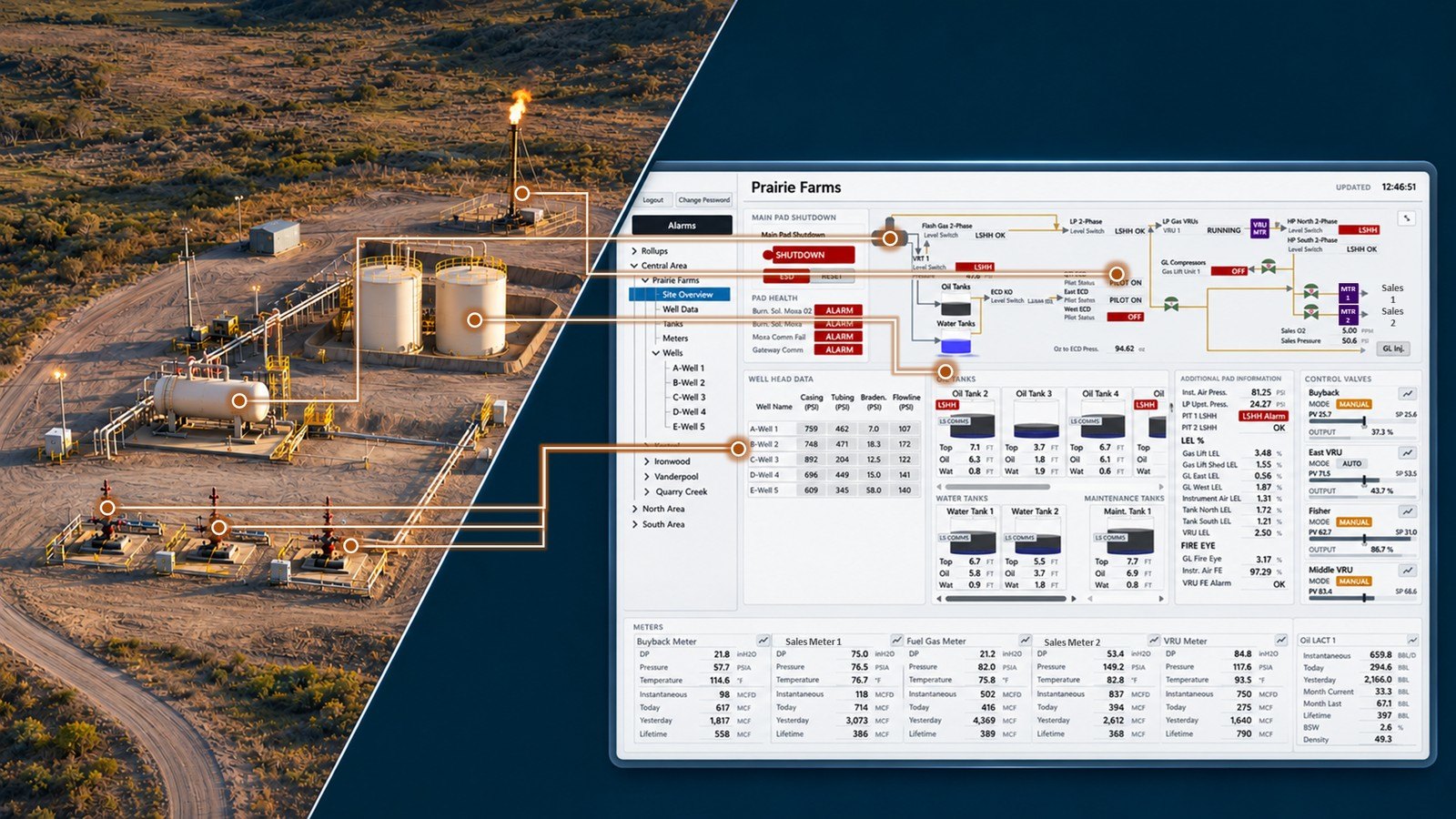
What is on the pad is what is on the screen.
Every well, separator and tank you can walk up to has a place on the display, in the same arrangement, so what you see matches what you would find if you drove out.
What we do
Whether you are building new or fixing what you have, we work to standards your team can keep using after we leave.
Standards & system design
Tag naming, data structure, data model and graphic standards, applied consistently so every site looks and behaves the same.
Migrations
Moving assets from an older SCADA platform to a new one without losing history, alarms or the habits operators rely on.
Data & reporting
Getting field data to production accounting, regulatory reporting and leadership dashboards, accurately and on schedule.
Screens operators use
Process graphics that show the state of the field at a glance, with consistent colours, clear alarms and no clutter.
Health checks
An independent look at your system: tag sprawl, alarm floods, backups, security and licensing. A written list of what to fix first.
Support & training
Responsive help when something breaks or changes, and training that leaves your team more capable, not more dependent.
How an engagement runs
No black boxes. You see what we are doing, why, and what it will cost before we do it.
Discover
We walk your system with the people who use it and write down what hurts.
Propose
A short, plain-language plan with scope, price and what is out of scope.
Build
Small releases you can test in a dev environment before anything touches production.
Hand over
Documentation, training and a clear line on what, if anything, you still need us for.
Tell us what you are trying to see.
A short note is enough. You will hear back from an engineer, not a sales team.